Breakfast That Fights Back: 5 Anti-Inflammatory Morning Plates
Quick Answer: An anti-inflammatory breakfast is built on four things: deeply colored fruit (polyphenols), whole grains or protein (steady blood sugar), omega-3 fats (walnuts, flax, chia), and minimal added sugar. Overnight oats with blueberries and walnuts, or eggs scrambled with spinach in olive oil, both hit all four in under ten minutes.
Your first meal sets the day’s chemical mood. You’re either feeding the fire or damping it down.
The good news: the anti-inflammatory version isn’t rabbit food with a halo. It’s berries, oats, eggs, and good fats doing quiet firefighting while tasting like an actual breakfast.
The bad news, if you were hoping otherwise: the daily pastry has to become a weekend guest.


What makes a breakfast anti-inflammatory?
Four components. Hit three and you’re doing well.
1. Deeply colored produce. The pigments that make blueberries dark and spinach green are polyphenols and carotenoids — compounds consistently associated with lower inflammatory markers in dietary research. Nature color-codes the useful stuff, which is a rare convenience.
2. Omega-3 fats. Walnuts, flaxseed, chia, and fatty fish supply ALA and long-chain omega-3s. These compete directly with omega-6 fats in the body’s inflammatory pathways, and most Western diets run heavily omega-6 dominant.
3. Steady blood sugar. Repeated glucose spikes are associated with increased inflammatory signaling. Protein, fat, and fiber together flatten the curve. This is the component most people miss, and it’s arguably the highest-impact one.
4. Minimal added sugar. Not zero — minimal. The daily 30g sugar hit in a pastry-and-juice breakfast does more inflammatory work than most of the “superfoods” undo.
Note what’s not on the list: any expensive powder, any single miracle ingredient, or anything you have to order online.
What are the best anti-inflammatory breakfasts?
Five that work, all of them genuinely fast.
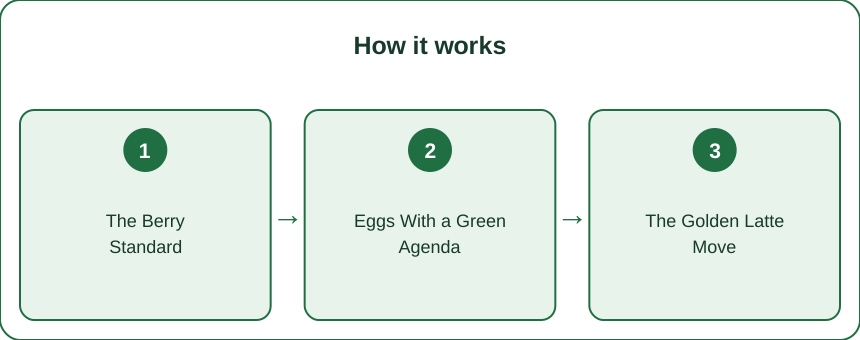
1. Overnight oats with blueberries and walnuts. Half a cup of rolled oats, milk of choice, a violent handful of blueberries, a tablespoon of chopped walnuts, cinnamon. Assemble in 3 minutes the night before. Hits all four components; the darkest berries carry the most polyphenols, so wild blueberries edge out cultivated ones.
2. Eggs with a green agenda. Two or three eggs scrambled with a big handful of spinach and some tomatoes, cooked in olive oil rather than butter. Roughly 20g of protein and a serving of vegetables before 9 a.m., which feels like winning a game nobody knew was scheduled.
3. Loaded Greek yogurt. A full cup of plain Greek yogurt (about 20g protein), a tablespoon of ground flaxseed, berries, and a small drizzle of honey. Protein, omega-3s, and live cultures in one bowl — the gut and the joints split the tip. Ground flax, not whole; whole seeds pass through undigested.
4. A golden latte alongside. Turmeric, milk of choice, and a genuine pinch of black pepper. The pepper is not optional — piperine substantially increases curcumin absorption, which is otherwise very poor. It won’t cure anything, but it’s a warm, mildly useful hug in a mug.
5. Savory oats or a chia pudding, if sweet mornings aren’t your thing. Oats cooked in stock with an egg on top and some greens works better than it sounds. Chia pudding made the night before with milk, chia, and berries is the lowest-effort option on the list.

What should I stop eating for breakfast?
The pastry-and-juice combination, mostly. It’s a sugar flare in a trench coat.
A croissant and a glass of orange juice is roughly 45–55g of fast-absorbing carbohydrate with almost no protein, fiber, or fat to slow it down — landing on a stomach that’s been empty for 12 hours. You get a sharp glucose rise, a matching crash around 10:30, and cravings that shape the rest of the day.
Other common offenders:
- Sweetened breakfast cereals, even the ones marketed as healthy. Check the label; many run 12g+ of sugar per serving.
- Flavored yogurt tubs. Frequently 15–20g of added sugar. That’s dessert wearing a health label.
- Fruit juice on its own. Whole fruit comes with fiber; juice has had it removed.
- Processed breakfast meats. Regularly associated with higher inflammatory markers.
Demote, don’t eliminate. A weekend pastry is genuinely fine. A daily one is the single biggest lever on this page, and the joints won’t send a thank-you card — they’ll just complain measurably less.
How fast will I notice a difference?
Faster on energy than on anything else.
Week 1: Steadier morning energy and no 10:30 crash. This is the blood sugar change, and it’s the most immediate and most noticeable.
Weeks 2–4: Better appetite regulation through the afternoon, and often improved digestion from the fiber and fermented foods.
Weeks 6–12: Any change in inflammation-related symptoms — joint stiffness, general aches — tends to show up on this timescale, and it depends heavily on the rest of the diet, not just breakfast.
Be realistic about what one meal can do. Breakfast is one of about 21 meals a week. An excellent breakfast followed by a poor day is still a poor day. What breakfast does well is set the blood sugar pattern and the appetite tone for the hours that follow, which makes the rest of the day easier to get right.
Myth vs Fact
Myth: You need turmeric supplements for anti-inflammatory benefits. Fact: Whole-diet patterns show far more consistent evidence than isolated supplements. Turmeric in food is a nice addition, not the mechanism.
Myth: Fruit is too high in sugar to be anti-inflammatory. Fact: Whole fruit arrives packaged with fiber, water, and polyphenols, and behaves nothing like juice or added sugar. Berries in particular are among the most consistently beneficial foods in the research.
Myth: Anti-inflammatory eating means giving up bread and grains. Fact: Whole grains are associated with lower inflammatory markers in most studies. Refined grains are the ones worth limiting.
FAQ
What are the best anti-inflammatory foods for breakfast?
Berries (especially blueberries and blackberries), walnuts, ground flaxseed, chia, oats, eggs, olive oil, leafy greens, and plain fermented dairy. Cinnamon and turmeric are useful additions. If you want the shortest possible list: berries, walnuts, and oats.
Can I still have coffee?
Yes — coffee is actually associated with lower inflammatory markers in most studies, largely from its polyphenol content. The problem isn’t the coffee, it’s what goes in it. A flavored syrup latte can carry 30g+ of sugar. Black, or with milk, is fine.
Is an anti-inflammatory diet actually proven to work?
The evidence for dietary patterns — Mediterranean-style eating in particular — reducing inflammatory markers is reasonably strong. The evidence for individual “superfoods” doing much on their own is much weaker. Treat this as a pattern to build, not a list of magic items.
Should I talk to a doctor about this?
If you have a diagnosed inflammatory condition — rheumatoid arthritis, IBD, psoriasis, lupus — talk to your physician or a registered dietitian before making significant dietary changes, especially alongside medication. Diet can support treatment, but it isn’t a substitute for it. Also check in if you have persistent joint pain, unexplained fatigue, or digestive symptoms rather than trying to eat your way past them.
TL;DR:
- Four components: colored produce, omega-3s, steady blood sugar, minimal added sugar
- Best plates: overnight oats with blueberries and walnuts; eggs with spinach in olive oil; loaded plain Greek yogurt with ground flax
- Black pepper with turmeric — no pepper, no absorption
- Demote the daily pastry-and-juice to a weekend guest
- Energy improves in week 1; inflammation-related symptoms take 6–12 weeks
- Whole grains and whole fruit are on your side; refined grains and juice aren’t
Rotate these for a week and let the afternoon energy do the testimonial.
Keep Reading
This article is for general informational purposes only and is not medical advice. Always consult a qualified health professional for guidance specific to you.