Alcohol on an Anti-Inflammatory Diet: What Changes and What Does Not
Quick Answer: Higher intakes of alcohol are consistently associated with increased inflammatory markers, disrupted sleep, and worse gut barrier function. Light intake shows mixed results and the old cardiovascular benefit story has weakened considerably in recent research. Practically: the amount and the pattern matter far more than the type of drink, and the sleep disruption from evening alcohol is often the biggest day-to-day effect on how inflamed you feel.
This is the question people ask last and worry about most. You have sorted the oils, the vegetables, and the spices, and then there is a Friday dinner and a glass of wine and nobody has told you where that fits.

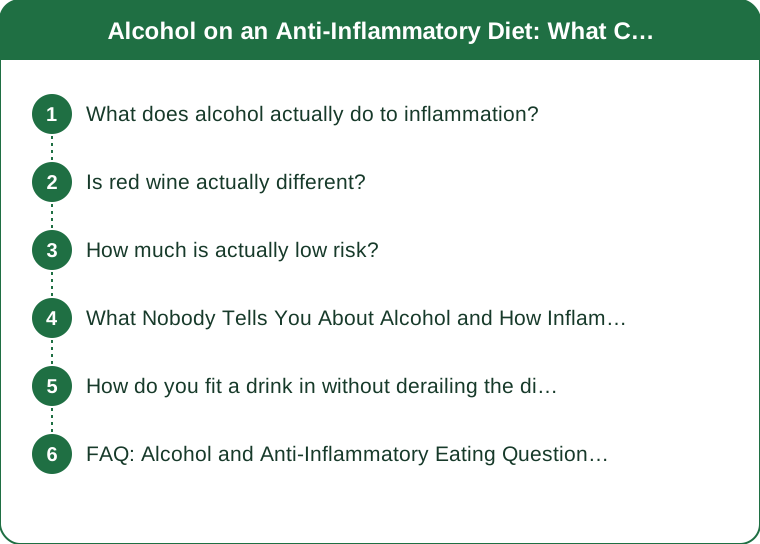
What does alcohol actually do to inflammation?
Several separate mechanisms, and they behave differently at different amounts.
Gut barrier permeability. Alcohol can increase the permeability of the intestinal lining, allowing more bacterial components to pass into circulation. Those components trigger an immune response, which is one of the more direct routes from drinking to systemic inflammatory signalling. This effect is much clearer at higher intakes.
Liver processing. Metabolising alcohol produces acetaldehyde and generates oxidative stress in the liver. Regular heavier intake drives measurable inflammatory activity there.
Sleep disruption. Alcohol reduces REM sleep and fragments the second half of the night, even at modest amounts. Poor sleep independently raises inflammatory markers, so this is a real pathway rather than a side note - and it is the one most people actually notice the next day.
Immune signalling. Studies have found associations between higher alcohol intake and elevated markers such as CRP and IL-6.
Nutrient interference. Alcohol affects absorption and status of several B vitamins and can worsen magnesium levels, both relevant to how you feel.
The pattern that emerges: the relationship is not a simple straight line, but the evidence for harm gets stronger as intake rises, and the once-confident story about light drinking being protective has weakened as study methods have improved.
Is red wine actually different?
Less than the last twenty years of marketing suggested.
Red wine contains polyphenols including resveratrol, which have anti-inflammatory activity in laboratory settings. That is where the story started. Two problems with it:
The amounts are small. The resveratrol in a glass of wine is a tiny fraction of the doses used in studies showing effects. You would need an implausible volume of wine to approach them, at which point the alcohol dominates whatever the polyphenols do.
The same polyphenols are available without alcohol. Grapes, berries, dark chocolate, green tea, and olive oil all deliver polyphenols with no alcohol attached. If polyphenols are what you are after, they are the efficient route by a wide margin.
What about the Mediterranean diet studies that include wine? Those describe a pattern - wine with food, in company, in modest amounts, within a diet rich in vegetables, fish, and olive oil. Extracting the wine from that context and treating it as the active ingredient is not what the research supports.
The practical read: if you enjoy red wine, it is a reasonable choice among alcoholic drinks and it comes with food more often than most. But choosing wine over beer or spirits is not an anti-inflammatory strategy - reducing the total is.
How much is actually low risk?
Guidance has shifted meaningfully, and it is worth knowing where it now sits.
Current UK guidance is no more than 14 units per week for both men and women, spread over three or more days, with several drink-free days. Fourteen units is roughly six 175ml glasses of wine or six pints of lower-strength beer.
Some national bodies have gone lower. Canada’s 2023 guidance describes risk as increasing from the first drink and frames two drinks or fewer per week as low risk. That is a substantial change from earlier advice and reflects a genuine shift in how the evidence is read.
What matters for inflammation specifically:
- Total weekly amount matters more than any single evening
- Binge pattern is worse than spread intake for the same total - the gut barrier and liver effects are dose-dependent within a session
- Drink-free days allow recovery, particularly for sleep quality
- With food is better than without - food slows absorption and reduces peak blood alcohol
A workable framework for someone eating an anti-inflammatory diet who does not want to abstain: keep it to one or two occasions a week, one or two drinks each time, with food, and not within three hours of bed. That last one does most of the work for how you feel the next day.
If you are pregnant, taking medication that interacts with alcohol, or have liver disease, this changes entirely - speak to your doctor. This is general information, not medical advice.

What Nobody Tells You About Alcohol and How Inflamed You Feel
The sleep effect is usually bigger than the direct effect. Two glasses at 10pm fragment the second half of your night. The joint stiffness, the puffiness, and the low mood the next day are as much about the sleep as about any inflammatory pathway. Moving the same drinks to 6pm with dinner changes how you feel far more than switching from wine to gin does.
Alcohol shows up in your food choices, not just your glass. Drinking reliably shifts what people eat, both that evening and the following day - more refined carbohydrate, more salt, fewer vegetables. For most people the dietary knock-on is a bigger deal than the alcohol itself.
Bloating and puffiness the next day is largely fluid, not fat. Alcohol affects fluid regulation and sodium handling, and combined with salty food you get visible next-day swelling. It resolves in a day or two and is not evidence that one evening undid three weeks of eating well.
The dose-response for joint symptoms is very individual. Some people notice a clear flare after one drink; others notice nothing at three. A two-week trial with a symptom note is worth more than any general rule, because your own pattern is the only one that matters for your decisions.
Zero-alcohol options have improved a lot. Alcohol-free beer, sparkling water with bitters, and non-alcoholic aperitifs cover the ritual of a drink, which is often the part you actually want. The social function of holding a glass is real, and it does not require the ethanol.
How do you fit a drink in without derailing the diet?
Six practical adjustments, in order of how much difference they make.
Move it earlier. Drinking with dinner at 6 or 7pm rather than at 10pm largely preserves sleep quality. This is the highest-return change on the list.
Eat first, or drink with food. Slower absorption, lower peak, less gut irritation, and you make better food choices than you do drinking on an empty stomach.
Choose the number before you start. Two drinks decided in advance beats deciding in the moment, particularly across a long dinner. Deciding in advance is the whole technique.
Alternate with water or a zero-alcohol option. Keeps the ritual, halves the total, and helps with the next-day fluid picture.
Keep two or three drink-free days consecutive rather than scattered. Consecutive days give sleep and gut recovery a proper run.
Protect the next morning deliberately. A decent protein breakfast, water, and a walk. Skipping breakfast and going straight to coffee is what turns one evening into a two-day dip.
And keep the perspective right. A vegetable-rich diet with olive oil, oily fish, and adequate fibre, plus regular movement and decent sleep, is doing the heavy lifting. Two glasses of wine on a Friday inside that pattern is a small variable. Four evenings a week is a large one - and the difference between those two is the only thing this question really turns on.
FAQ: Alcohol and Anti-Inflammatory Eating Questions, Answered
Is any amount of alcohol anti-inflammatory?
The evidence does not support drinking for anti-inflammatory benefit. Some studies find lower markers at light intakes than at none, but the methods are debated and the effect is small compared with diet, sleep, and activity.
Which drink is the least inflammatory?
The amount matters far more than the type. If you want a general ranking, drinks lower in alcohol and with fewer added sugars are the better choice - a small glass of wine or a lower-strength beer over sugary cocktails and spirits with mixers.
Why do my joints feel worse after drinking?
Commonly a combination of disturbed sleep, fluid shifts, and the food that accompanied the drinks. For some people alcohol does trigger symptoms more directly. A two-week trial without it, keeping a simple symptom note, will tell you your own answer.
Do I need to give up alcohol completely to follow an anti-inflammatory diet?
No. Most versions of anti-inflammatory eating accommodate modest intake with food. If you have an inflammatory condition, ask your specialist - some conditions and medications make abstaining the clearly better choice.
TL;DR:
- Higher intakes raise inflammatory markers via gut permeability, liver stress, and sleep disruption
- Red wine polyphenols are real but the amounts are tiny - grapes, berries, and olive oil do it better
- Total weekly amount and binge pattern matter more than which drink you choose
- Move drinks earlier in the evening - the sleep effect is often the biggest day-to-day factor
- Decide the number in advance, drink with food, and keep two or three consecutive drink-free days
Alcohol is not the variable that decides whether an anti-inflammatory diet works. It is a variable that can quietly undo the sleep and food quality that make it work, which is why timing and total are worth more attention than the contents of the glass.
Keep Reading
This article is for general informational purposes only and is not medical advice. Always consult a qualified health professional for guidance specific to you.