How to Actually Follow an Anti-Inflammatory Diet When Eating Out
Quick Answer: Order proteins grilled or baked instead of fried, ask for sauces and dressings on the side, add a vegetable side instead of fries, and don’t stress about occasional exceptions — consistency over weeks matters far more than any single meal out.
Most anti-inflammatory diet advice assumes you’re cooking every meal at home. Real life includes dinners out, work lunches, and social plans — and the diet doesn’t have to fall apart the moment you hand your order to a server.

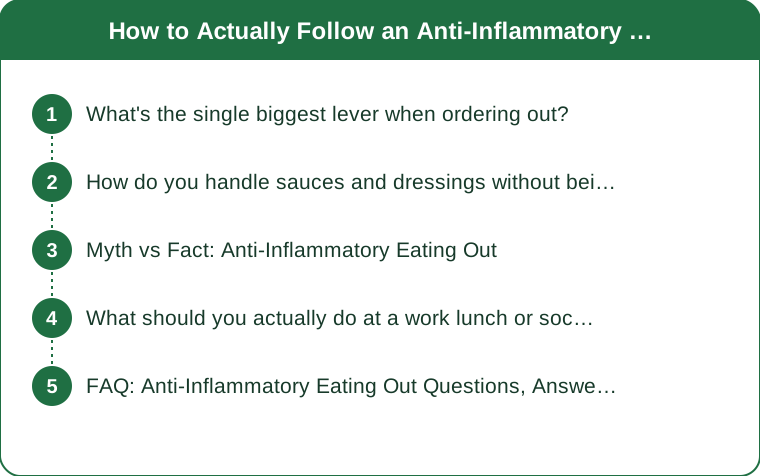
What’s the single biggest lever when ordering out?
Cooking method, more than the ingredient itself. A grilled or baked piece of salmon and a deep-fried piece of salmon start as the same fish, but the frying oil (often reused, often a high-omega-6 seed oil heated repeatedly) adds a meaningful inflammatory load that grilling doesn’t.
Scanning a menu for ‘grilled,’ ‘baked,’ ‘roasted,’ or ‘steamed’ before you scan for the protein itself catches more inflammatory triggers than almost any other single habit.
How do you handle sauces and dressings without being that difficult customer?
Just ask for them on the side — this is a completely normal, common request that no server blinks at. It lets you control the amount instead of eating a dish drenched in a sauce that’s often loaded with added sugar, seed oils, or excess sodium.
A salad with dressing on the side, dipped rather than poured, can cut the added oil and sugar by more than half without changing what you ordered.

Myth vs Fact: Anti-Inflammatory Eating Out
Myth: You have to order a salad every time to stay on track. Fact: A grilled protein with a vegetable side is just as on-plan and far less likely to leave you hungry an hour later.
Myth: One inflammatory meal undoes weeks of good eating. Fact: Chronic inflammation responds to patterns over time, not single meals — one dinner out isn’t erasing three weeks of consistent choices.
Myth: Anti-inflammatory eating means no bread, ever. Fact: Occasional bread isn’t the issue for most people — frequency and what else is on the plate matter more than one absolute rule.
What should you actually do at a work lunch or social event with no menu control?
Use the 80/20 approach in the moment: pick the best available option (protein + vegetable over the fried appetizer sampler), eat until satisfied rather than clean-plating out of habit, and let it be one meal, not a referendum on the whole week.
The goal at low-control meals isn’t perfection — it’s making the best choice available and moving on without guilt driving worse choices later.

FAQ: Anti-Inflammatory Eating Out Questions, Answered
Is it okay to have dessert occasionally on an anti-inflammatory diet?
Yes — occasional treats within an overall consistent pattern don’t meaningfully change inflammation markers; it’s the daily baseline that matters most.
What should I avoid most when eating out?
Deep-fried items and dishes with heavy cream- or sugar-based sauces tend to carry the highest inflammatory load — grilled and roasted options are the safer default.
Do I need to ask restaurants what oil they cook with?
It’s a reasonable question if you’re managing a specific condition, but for general anti-inflammatory eating, focusing on cooking method (grilled vs fried) covers most of what matters without needing a full ingredient interrogation.
TL;DR:
- Scan the menu for cooking method first — grilled/baked/roasted over fried
- Ask for sauces and dressings on the side to control portion
- One meal out doesn’t undo weeks of consistent eating
- At low-control meals, pick the best available option and move on without guilt
An anti-inflammatory diet that can’t survive a dinner reservation isn’t sustainable long-term. Build in the flexibility from day one. This is general information, not medical advice.
Keep Reading
This article is for general informational purposes only and is not medical advice. Always consult a qualified health professional for guidance specific to you.