Anti-Inflammatory Diet Not Working Anymore? Here Is Why the Plateau Happens
Quick Answer: Anti-inflammatory diet plateaus usually come from portion creep, hidden inflammatory ingredients in ‘healthy’ packaged foods, or inconsistent sleep and stress undermining dietary changes — not from the approach itself failing.
The first few weeks felt like real progress. Now, two months in, joint stiffness and energy dips are creeping back, even though you’re still eating the same way. That’s not your body rejecting the approach — it’s usually one of a few specific, fixable drifts.

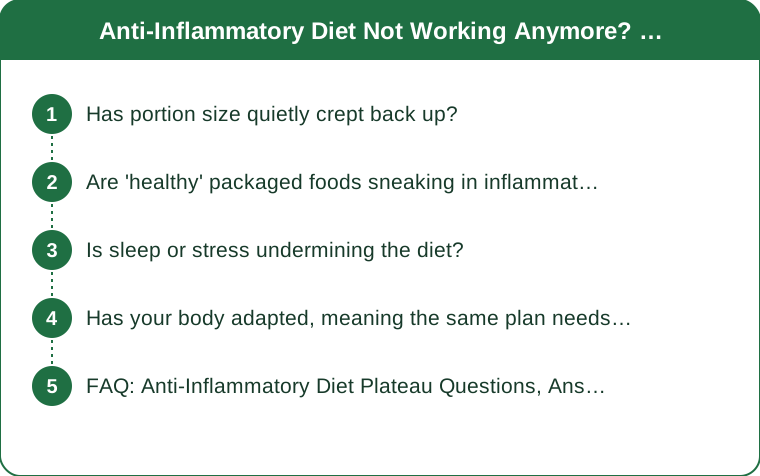
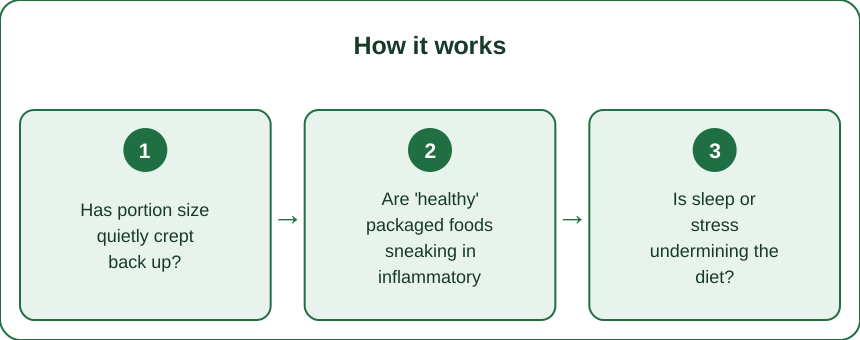
Has portion size quietly crept back up?
Early motivation often means smaller, more careful portions without realizing it. As the diet becomes routine, portions can drift back toward old habits even while food choices stay ‘clean’ — and inflammation is sensitive to total intake, not just food type.
Are ‘healthy’ packaged foods sneaking in inflammatory ingredients?
Many anti-inflammatory-labeled snack bars, dressings, and plant-based products contain refined seed oils or added sugars that work against the goal. Reading labels again after a few months (not just when you started) often reveals ingredient creep.

Is sleep or stress undermining the diet?
Diet is one lever in a system that includes sleep and stress, both of which directly affect inflammatory markers. A diet that worked well during a lower-stress period can feel like it’s ‘stopped working’ simply because a stressful month or poor sleep stretch is adding inflammation from a different direction entirely.
Has your body adapted, meaning the same plan needs a refresh?
Sometimes the plateau isn’t a mistake at all — it’s a sign the initial changes did their job and further improvement now needs a different lever, like adding more variety in polyphenol-rich foods or adjusting omega-3 intake, rather than repeating the same first-month plan indefinitely.
FAQ: Anti-Inflammatory Diet Plateau Questions, Answered
How long before an anti-inflammatory diet plateau is a real problem?
A few weeks of stalled progress is common and often resolves with the fixes above. Several months without any further improvement is worth discussing with a doctor or dietitian.
Should I cut more foods if progress stalls?
Not necessarily — check portions, hidden ingredients, and sleep/stress first. Over-restriction can create its own problems without addressing the actual cause.
Can stress really undo dietary progress?
Yes, chronic stress affects inflammatory markers independently of diet. Addressing both together tends to work better than doubling down on food changes alone.
TL;DR:
- Plateaus usually come from portion creep, hidden ingredients, or sleep/stress, not diet failure
- Re-check labels on ‘healthy’ packaged foods every few months
- Stress and sleep directly affect inflammation independent of what you eat
- Sometimes a plateau means it’s time to add variety, not cut more foods
This is general information, not medical advice — persistent symptoms deserve a professional look.
Keep Reading
This article is for general informational purposes only and is not medical advice. Always consult a qualified health professional for guidance specific to you.