How to Stay Anti-Inflammatory at Social Events Without Feeling Left Out
Quick Answer: The most sustainable approach to social events on an anti-inflammatory diet is eating a small protein-rich snack beforehand, scanning the spread for anti-inflammatory-friendly options first, allowing one flexible choice without guilt, and not over-explaining your eating pattern to the room. Rigid all-or-nothing rules are what usually cause people to quit.
Social events are where most anti-inflammatory eating plans quietly fall apart — not because the food is impossible to navigate, but because the pressure to explain yourself or the fear of ‘ruining’ the plan leads to either overly rigid avoidance or giving up entirely for the night.

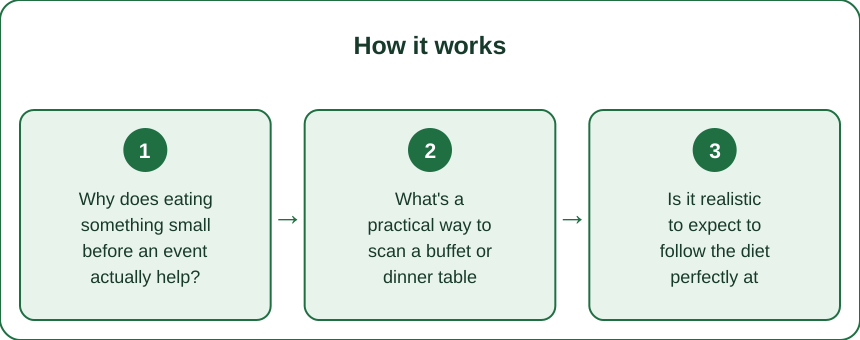
Why does eating something small before an event actually help?
Arriving hungry is one of the most reliable predictors of eating past your intended plan, regardless of what diet you’re following. A small protein-and-fiber snack 30-60 minutes before an event takes the edge off hunger, making it far easier to make deliberate choices from the spread instead of grazing on whatever’s closest.
What’s a practical way to scan a buffet or dinner table quickly?
Rather than scrutinizing every dish, do a quick pass of the table first, identifying anti-inflammatory-friendly anchors (grilled proteins, vegetables, olive-oil-based dishes) before filling your plate, then add one or two other items you genuinely want. This front-loads your plate with foods that support your goals without turning the meal into a stressful audit of every ingredient.

Is it realistic to expect to follow the diet perfectly at every event?
No, and treating one flexible choice as an acceptable, planned part of the strategy — rather than a failure — is what actually makes the approach sustainable long-term. People who allow themselves one dessert or one non-ideal dish without spiraling into ‘I’ve already ruined it’ tend to stay consistent far longer than those chasing perfection.
Myth vs Fact: Anti-Inflammatory Eating at Social Events
Myth: You have to explain your diet to everyone or bring your own food to stay consistent. Fact: Quietly choosing well from what’s available works just as well and avoids the social friction that often leads to giving up on the plan altogether.
Myth: One indulgent meal undoes weeks of anti-inflammatory eating. Fact: A single meal has limited long-term impact; consistent patterns over weeks and months are what actually drive inflammatory markers, not any single event.
FAQ: Anti-Inflammatory Eating at Social Events, Answered
Should I eat before a dinner party even if I plan to eat the meal there too?
A small snack, not a full meal, is usually enough to prevent overeating without spoiling your appetite for the actual dinner.
Is it rude to ask the host about ingredients?
A brief, casual question (‘is this made with butter or oil?’) is generally fine and doesn’t require explaining your full eating approach.
What if there’s genuinely nothing anti-inflammatory-friendly available?
Enjoy the meal as it is and return to your normal pattern the next day — one meal doesn’t undo a consistent, longer-term approach.
TL;DR:
- A small snack beforehand prevents arriving hungry and overeating from stress
- Scan for anti-inflammatory anchors first, then allow one flexible choice guilt-free
- Rigid, all-or-nothing rules are what usually cause people to abandon the diet entirely
- One meal has minimal long-term impact — consistency over weeks is what matters
This is general information, not medical advice — check with your doctor or a dietitian for guidance specific to your condition.
Keep Reading
This article is for general informational purposes only and is not medical advice. Always consult a qualified health professional for guidance specific to you.