The Late-Summer Produce Window: 8 Anti-Inflammatory Foods at Their Actual Peak Right Now
Quick Answer: Late summer is the peak window for several genuinely useful anti-inflammatory foods - tomatoes, berries, stone fruit, peppers, courgette, leafy herbs, sweetcorn, and fatty fish - and peak season means both higher polyphenol content and lower prices. Buying and preserving now costs less and delivers more than buying the same items in February.
Anti-inflammatory eating advice usually ignores seasonality entirely, which is odd, because the same food is measurably different in August than in February. Here’s what’s actually at its best right now and what to do with it.
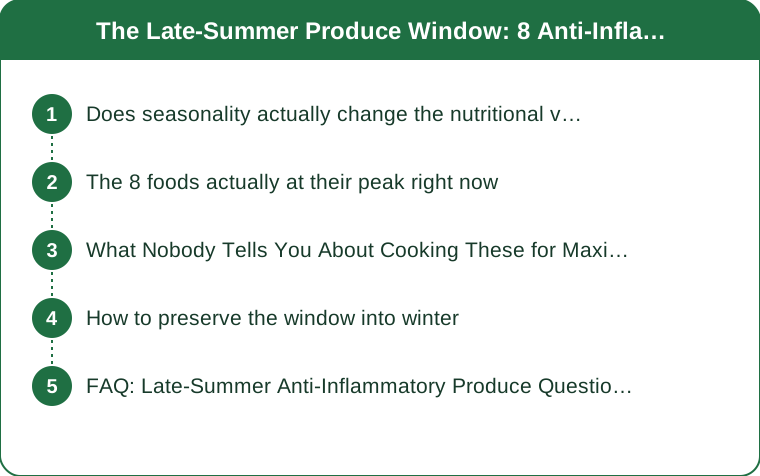
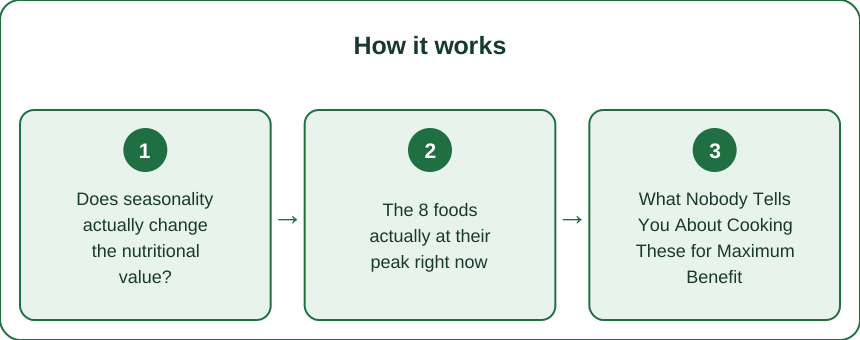
Does seasonality actually change the nutritional value?
Yes, though the size of the effect varies by nutrient.
Polyphenol content is the most season-sensitive. These compounds - which include the anthocyanins in berries and the flavonoids in herbs - are partly produced by plants in response to sunlight and environmental stress. Produce that ripens fully on the plant in high summer light tends to have higher levels than produce harvested early and ripened in transit.
Vitamin C degrades with time and handling. A tomato picked ripe and eaten within days retains substantially more than one picked green, shipped, and stored.
Fat-soluble compounds like lycopene behave a bit differently - in tomatoes, lycopene is more available after cooking than raw, which is why tinned tomatoes are genuinely a good option year-round rather than a compromise.
Where it matters less: minerals are relatively stable, and frozen produce - which is typically frozen within hours of harvest - often outperforms fresh out-of-season produce on most measures.
The practical upshot: eat what’s local and in season now, and use frozen rather than sad fresh imports the rest of the year.
The 8 foods actually at their peak right now
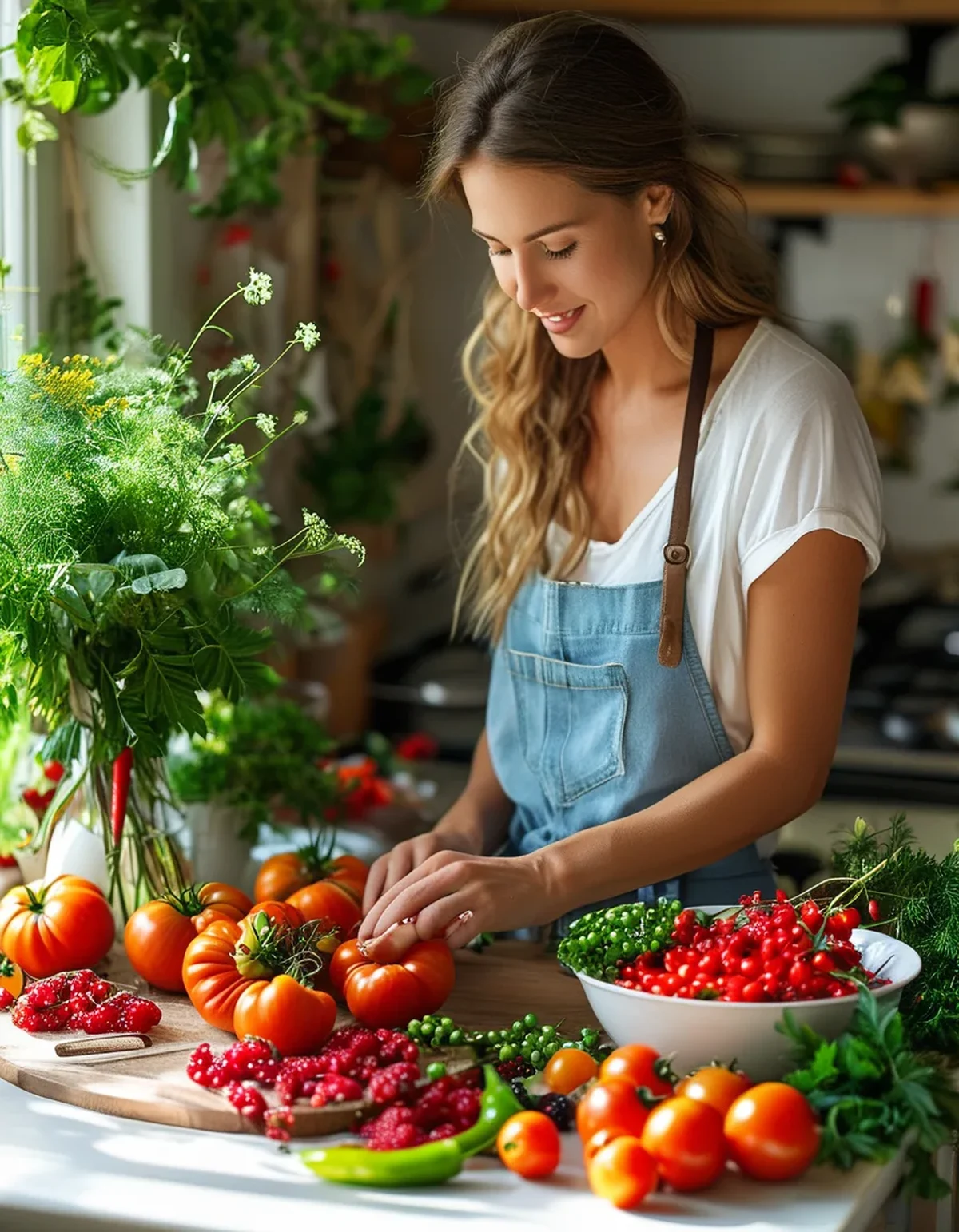
1. Tomatoes. Lycopene content peaks in fully vine-ripened fruit. Cook them with a little olive oil - both heat and fat increase lycopene availability. This is the single best month of the year for tomatoes.
2. Berries. Late-season blackberries and raspberries are at their anthocyanin peak. These are among the most studied anti-inflammatory compounds in ordinary food.
3. Stone fruit. Peaches, plums, and nectarines carry a mix of polyphenols and are at their cheapest and ripest right now.
4. Peppers. Red and orange bell peppers contain more vitamin C by weight than citrus, and late summer is when they’re fully ripened rather than picked green.
5. Courgette and summer squash. Not a nutritional powerhouse individually, but abundant, cheap, and an easy vehicle for olive oil and herbs.
6. Soft leafy herbs. Basil, parsley, mint, and coriander are at their most abundant and most aromatic - and aromatic compounds correlate with the polyphenols worth having.
7. Sweetcorn. Contains lutein and zeaxanthin, and fresh corn is dramatically better than any other form.
8. Oily fish. Not seasonal in the same way, but late summer is a good time for it to be a habit - omega-3 fatty acids remain one of the better-supported dietary anti-inflammatory levers.
What Nobody Tells You About Cooking These for Maximum Benefit
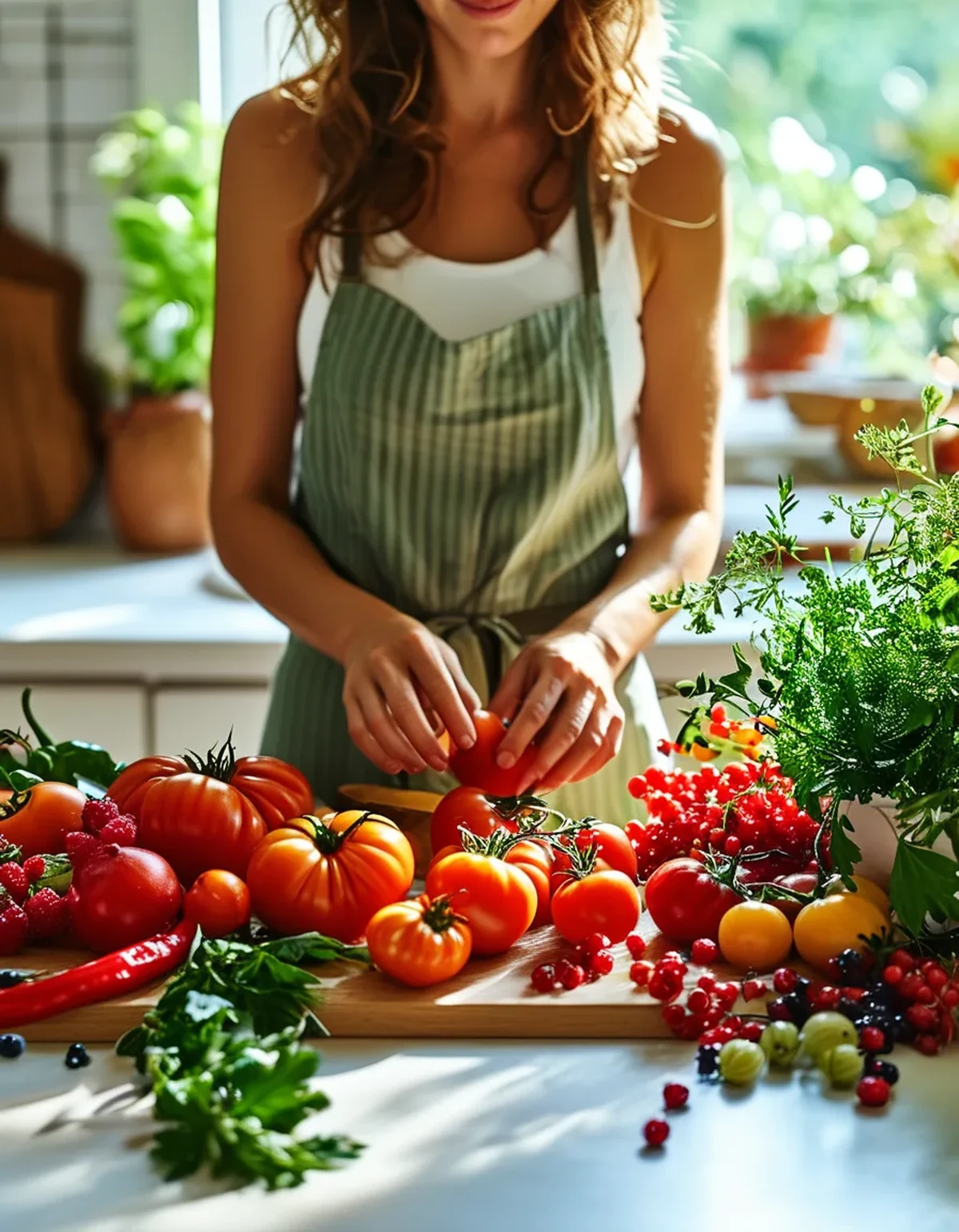
Fat matters more than you think. Many of the useful compounds in this list - lycopene, carotenoids, vitamins A, D, E, and K - are fat-soluble. Eating a tomato salad with no fat means absorbing substantially less of what’s in it. A tablespoon of olive oil isn’t a garnish; it’s part of the delivery mechanism.
Heat helps some things and destroys others. Tomatoes improve with cooking. Peppers lose vitamin C with prolonged heat but retain carotenoids. Berries lose some anthocyanin with heat, which is an argument for eating them raw. There’s no single rule, which is why variety in preparation matters.
Herbs go in at the end. The volatile aromatic compounds in basil and parsley - the ones you’re actually after - are largely destroyed by prolonged cooking. Add them off the heat.
Don’t peel unless you have to. A significant share of polyphenols in stone fruit, peppers, and courgette sits in or just under the skin.
Acid helps iron absorption. Pairing leafy greens with tomato or lemon improves how much plant iron you actually take up - a small pairing habit with a real effect.
How to preserve the window into winter
This is the part that turns a good month into a good six months, and it’s simpler than most preserving advice suggests.
Freeze berries flat on a tray first, then bag them. They keep their structure far better than freezing in a bag directly, and they’re the easiest item on this list to preserve well.
Roast and freeze tomatoes and peppers. Halve, toss with olive oil, roast at 180C for 40 minutes, cool, freeze in portions. This concentrates flavour and preserves the lycopene benefit in a form you’ll actually use.
Herb oil or herb cubes. Blend soft herbs with olive oil, freeze in an ice cube tray. Far better than drying for basil and parsley, which lose most of their character when dried.
Stone fruit freezes well sliced, though texture suffers - plan for it to go into cooking rather than to be eaten fresh.
Sweetcorn: cut from the cob and freeze raw. No blanching needed for a few months of storage.
What not to bother with: courgette freezes poorly and turns to water. Eat it now. Leafy herbs don’t dry well. Buy what you’ll use.
Realistic effort: two hours on one weekend afternoon fills a freezer drawer that lasts until spring.
FAQ: Late-Summer Anti-Inflammatory Produce Questions, Answered
Is frozen produce actually as good as fresh?
For most nutrients, frozen produce picked at peak and frozen quickly compares well with fresh - and often beats fresh produce that’s travelled a long distance out of season.
Does any of this replace medication for an inflammatory condition?
No. Dietary patterns are a supportive factor alongside medical treatment, not a replacement for it. This is general information, not medical advice.
How much of these foods do I actually need to eat?
Most dietary pattern guidance points toward variety and consistency over large quantities of any single food. A serving or two of these daily is more realistic and more useful than a short intense push.
Are organic versions meaningfully better for this purpose?
The polyphenol evidence is mixed and the differences are generally small compared to the difference between eating these foods and not eating them. Buy what fits your budget and eat more of it.
TL;DR:
- Peak-season produce genuinely carries higher polyphenol content than out-of-season equivalents
- Eight foods are at their window right now: tomatoes, berries, stone fruit, peppers, courgette, soft herbs, sweetcorn, oily fish
- Fat-soluble compounds need actual fat to be absorbed - olive oil is part of the mechanism
- Add herbs off the heat; cook tomatoes; eat berries raw
- Two hours of freezer prep this month carries the window into winter
This is general information, not medical advice - dietary changes support treatment rather than replace it.
Keep Reading
This article is for general informational purposes only and is not medical advice. Always consult a qualified health professional for guidance specific to you.