5 Anti-Inflammatory Grocery List Mistakes That Quietly Undo the Whole Diet
Quick Answer: The 5 most common anti-inflammatory grocery mistakes are buying flavored yogurt instead of plain, cooking with the wrong oil for the job, choosing ‘multigrain’ over true whole grain, over-relying on packaged ‘healthy’ snacks, and skipping the frozen produce aisle out of a fresh-only bias.
An anti-inflammatory cart can look complete at checkout and still be working against you — these are the specific swaps that close the gap.

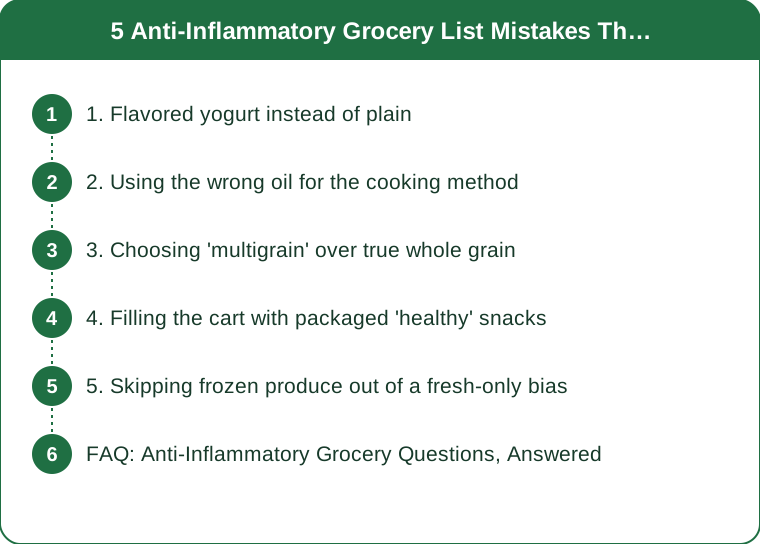
1. Flavored yogurt instead of plain
Flavored yogurts, even ones marketed as healthy, often carry 10-15 grams of added sugar per serving, which works against the anti-inflammatory goal the yogurt itself was meant to support. Buy plain (regular or Greek) and add your own fruit or a small drizzle of honey — you control the sugar instead of the label deciding for you.
2. Using the wrong oil for the cooking method
Extra virgin olive oil is genuinely anti-inflammatory, but it has a relatively low smoke point and breaks down into less beneficial compounds when used for high-heat searing or frying. Save it for finishing dishes and lower-heat cooking; use avocado oil for high-heat methods instead.
3. Choosing ‘multigrain’ over true whole grain
‘Multigrain’ on a label describes variety, not whole-grain content — a multigrain bread can still be made primarily from refined flour with a few whole grains added for the label. Check that the first ingredient specifically says ‘whole’ (whole wheat, whole oat) rather than trusting the multigrain claim alone.

4. Filling the cart with packaged ‘healthy’ snacks
Many snack bars and chips marketed around anti-inflammatory buzzwords (turmeric, superfood, etc.) still contain refined oils and added sugars in quantities that offset the marketed ingredient. A short ingredient list with recognizable whole foods is a more reliable filter than the front-of-package claims.
5. Skipping frozen produce out of a fresh-only bias
Frozen fruits and vegetables are typically flash-frozen at peak ripeness, preserving nutrients that can actually decline in fresh produce during days of transport and shelf time. Skipping the frozen aisle entirely can mean fewer servings overall if fresh produce goes unused before spoiling — frozen is a legitimate, often more practical anti-inflammatory choice.
FAQ: Anti-Inflammatory Grocery Questions, Answered
Is frozen produce really as good as fresh for an anti-inflammatory diet?
Often comparable or better on nutrient content specifically because of flash-freezing at peak ripeness — the main tradeoff is texture in some dishes, not nutrition.
How do I quickly check if a bread is truly whole grain?
Look for ‘whole wheat’ or ‘whole grain’ as the first ingredient, not just present somewhere in the list, and not just the word ‘multigrain’ or ‘wheat’ on the front label.
Are all packaged snacks bad for an anti-inflammatory diet?
No, but check the ingredient list length and added sugar content rather than trusting anti-inflammatory buzzwords on the front of the package.
TL;DR:
- Plain yogurt with your own added fruit beats flavored yogurt’s hidden sugar
- Save olive oil for finishing dishes, not high-heat cooking
- Check that bread’s first ingredient says ‘whole,’ not just ‘multigrain’
- Frozen produce is a legitimate, often more practical anti-inflammatory choice
Small label-reading habits at checkout matter more than which store you shop at.
Keep Reading
This article is for general informational purposes only and is not medical advice. Always consult a qualified health professional for guidance specific to you.