The Anti-Inflammatory Spice Cabinet: What to Actually Keep Stocked
Quick Answer: Turmeric (with black pepper), ginger, cinnamon, garlic, and cayenne form the core of a practical anti-inflammatory spice cabinet — the trick is using them daily in small, realistic amounts rather than occasional large doses.
Anti-inflammatory eating content often jumps straight to expensive supplements, skipping the spice cabinet that’s usually already half-stocked. A handful of common spices, used consistently, does real work.

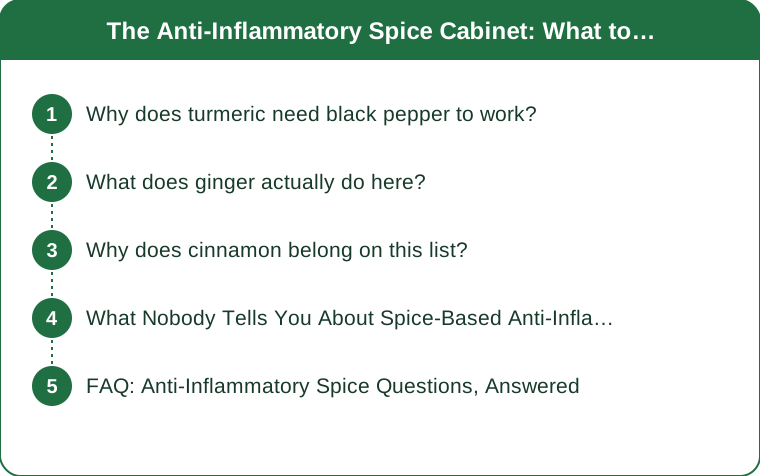
Why does turmeric need black pepper to work?
Curcumin, turmeric’s active compound, has notably low bioavailability on its own — piperine in black pepper has been shown to significantly increase curcumin absorption. A pinch of black pepper added anytime you use turmeric essentially unlocks more of what you’re already adding.
What does ginger actually do here?
Ginger contains gingerol, a compound studied for anti-inflammatory properties, and works well both fresh (grated into stir-fries or tea) and dried (in baking or spice blends). Fresh ginger tea — a few slices steeped 10 minutes — is one of the simplest daily habits to add.

Why does cinnamon belong on this list?
Beyond flavor, cinnamon (particularly Ceylon over cassia for regular use) has documented anti-inflammatory and blood-sugar-supporting properties. A daily half-teaspoon in coffee, oatmeal, or yogurt is an easy, low-effort addition.
What Nobody Tells You About Spice-Based Anti-Inflammatory Eating
Nobody mentions that consistency matters far more than quantity — a small daily pinch of turmeric over months does more than an occasional large “golden milk” splurge. Nobody mentions that garlic needs to sit chopped or crushed for about 10 minutes before cooking for its beneficial allicin compound to fully develop. And almost nobody mentions that pre-ground spices lose potency within about 6 months — that jar in the back of your cabinet from two years ago is mostly flavor-free at this point.
FAQ: Anti-Inflammatory Spice Questions, Answered
How much turmeric should I use daily for anti-inflammatory benefits?
Most research uses doses higher than typical cooking amounts, but a consistent daily half-to-full teaspoon with black pepper in cooking is a reasonable, food-based starting habit — not a substitute for medical treatment of any inflammatory condition.
Do anti-inflammatory spices interact with medications?
Turmeric and ginger in particular can interact with blood thinners at higher doses — check with a doctor if you’re on any blood-thinning medication before significantly increasing intake.
Is cooking with these spices as effective as supplements?
Food-based intake is generally considered safer and better absorbed alongside fats and other compounds in a meal, though it typically delivers a lower dose than concentrated supplements — both approaches have tradeoffs worth discussing with a healthcare provider for specific conditions. This is general information, not medical advice.
TL;DR:
- Turmeric + black pepper, ginger, cinnamon, garlic, and cayenne cover the anti-inflammatory basics
- Consistency in small daily amounts beats occasional large doses
- Let chopped garlic rest 10 minutes before cooking for full benefit
- Replace ground spices every 6 months — old ones lose potency
This is general information, not medical advice — check with a doctor before making major changes if you take blood-thinning medication.
Keep Reading
This article is for general informational purposes only and is not medical advice. Always consult a qualified health professional for guidance specific to you.