Your Spice Rack Is a Tiny Pharmacy (Use It Like One)
Quick Answer: Turmeric, ginger, garlic, and cinnamon are common everyday spices with reasonable evidence behind their anti-inflammatory potential, but the amount matters — a light dusting won’t do much. Using them generously and consistently, paired with a few simple prep tricks like adding black pepper to turmeric, is what actually makes a difference.
You bought that jar of turmeric back in 2023 for one specific recipe, and it’s been sitting in the back of the cabinet ever since, quietly judging your follow-through. Here’s the good news: it’s not too late for a reunion. Your spice rack is one of the cheapest, most accessible anti-inflammatory toolkits you already own — you just have to actually use it, and use enough of it to matter.

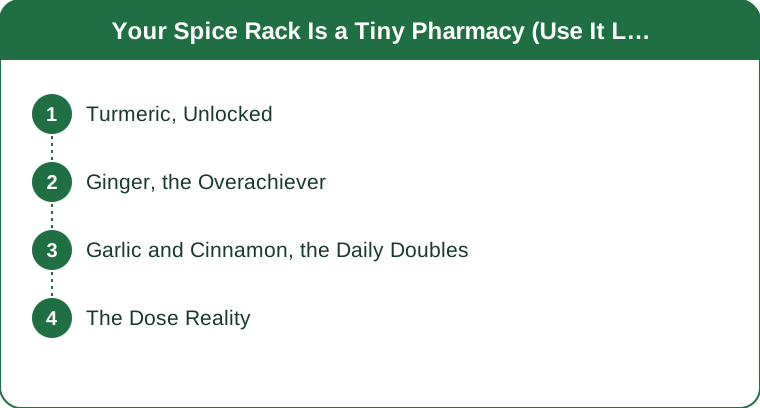
Why do spices matter for inflammation in the first place?
Certain everyday spices contain compounds that have been studied for their potential role in supporting the body’s normal inflammatory response — this isn’t a fringe idea, it’s part of why traditional cuisines have leaned on spices like turmeric and ginger for centuries. The catch is that occasional or minimal use rarely delivers a meaningful amount, so the goal isn’t finding a magic spice, it’s building a habit of using the ones you already have, consistently and generously.
How do you actually get the benefit out of turmeric?
Turmeric is the best-known anti-inflammatory spice, largely thanks to curcumin, its active compound — but curcumin has a well-documented absorption problem when eaten alone. Pairing turmeric with black pepper and a bit of fat significantly improves how much your body actually absorbs. This isn’t a modern biohack — curries have quietly paired turmeric with black pepper for centuries, long before supplement aisles caught on. Practical ways to use this:
- Add a pinch of black pepper any time you cook with turmeric
- Cook turmeric into dishes that already include some fat — oil, coconut milk, ghee
- Stir it into scrambled eggs, roasted vegetables, or rice for an easy daily habit
What makes ginger worth keeping on hand?
Ginger has genuinely solid evidence behind it for two specific things: easing nausea and reducing post-exercise muscle soreness. Fresh ginger grated into stir-fries, steeped into tea, or kept in the freezer (where it grates like a dream and never seems to go bad) makes it easy to use regularly rather than occasionally. A few ways to work it in:
- Grate frozen ginger straight into a stir-fry — no thawing, no mess
- Steep sliced fresh ginger in hot water for a simple after-meal or post-workout tea
- Add it to a post-exercise smoothie if soreness is your main concern

Are garlic and cinnamon worth using every day?
Yes — both are inexpensive, easy to use daily, and each brings something slightly different to the table. Garlic’s beneficial compounds are maximized when it’s crushed or chopped and left to rest for about ten minutes before cooking, giving its enzymes time to do their thing before heat changes them. Cinnamon is an easy daily add to oats, coffee, or yogurt, and is commonly discussed for its potential role in supporting healthy blood sugar levels alongside a balanced diet. Both cost just pennies per serving, which makes “use it daily” a realistic goal rather than an expensive one.
How much of these spices do you actually need to use?
This is where most people fall short: a light dusting is a vibe, not a dose. Getting a meaningful amount typically means using something closer to a teaspoon per serving, spread across multiple meals during the week, rather than a token shake once in a while. Cooking with spices “like you mean it” — generously, regularly, across different meals — is what turns your spice rack from decoration into an actual daily habit.
Myth vs Fact: Anti-Inflammatory Spices
Myth: A sprinkle of turmeric on your food is basically medicine. Fact: Curcumin absorbs poorly on its own — pairing it with black pepper and some fat is what actually helps your body use it.
Myth: Spices can replace a doctor’s care for a diagnosed inflammatory condition. Fact: Spices are a reasonable, low-cost addition to a healthy diet, but they’re not a substitute for medical treatment — talk to a doctor about any ongoing pain, swelling, or diagnosed condition.
Myth: More exotic and expensive spices work better than the basics. Fact: Turmeric, ginger, garlic, and cinnamon — all common pantry staples — have some of the most everyday, accessible support behind them.
Mini FAQ
Do I need supplements instead of just cooking with these spices?
Not necessarily — food-based use is a reasonable starting point for most people, since it fits naturally into meals you’re already eating. If you’re considering a supplement for a specific health concern, it’s worth discussing with a doctor first.
How much turmeric should I use per meal?
There’s no single official number, but using it generously and consistently — closer to a teaspoon per dish, paired with black pepper and some fat — is more useful than an occasional pinch.
Can spices help with chronic pain or arthritis?
They may offer some general support as part of an overall healthy diet, but chronic pain or diagnosed inflammatory conditions should be managed with a doctor’s guidance, not spices alone.
TL;DR
- Turmeric, ginger, garlic, and cinnamon are everyday spices with reasonable evidence behind their anti-inflammatory potential.
- Pair turmeric with black pepper and fat to actually absorb the curcumin.
- Ginger has solid evidence for nausea and post-exercise soreness.
- Let crushed garlic rest 10 minutes before cooking; use cinnamon daily in oats or coffee.
- Use spices generously and consistently — a light dusting rarely does much.
- See a doctor for chronic pain or diagnosed inflammatory conditions; spices support, not replace, medical care.
Keep Reading
This article is for general informational purposes only and is not medical advice. Always consult a qualified health professional for guidance specific to you.